Security cameras help homeowners improve visibility around the property and understand what is happening near key areas of the home. A camera system can support a stronger protection plan by covering entrances, approach paths, driveways, side yards, rear access points, and other areas where activity may occur.
Canada First helps homeowners in Oakville, Toronto, and the GTA plan security camera coverage as part of a layered home security strategy. The goal is to create a practical system that improves awareness, supports detection, and works with the home’s actual layout.
Security cameras work best when they are connected with other protection layers, including physical fortification, security window film, alarm systems, monitoring options, and FogShield anti-intrusion systems where appropriate. When each layer has a clear purpose, the home becomes easier to monitor and better prepared for a possible break-in attempt.
In This Article
- Why Security Cameras Matter in a Layered Home Protection Plan
- What Security Cameras Do Best
- Why Camera Placement Matters
- How Security Cameras Work With Alarms and Monitoring Options
- Hinge-Side Reinforcement and Door Direction
- How Security Cameras Work With Physical Fortification
- Areas Where Camera Coverage May Be Helpful
- What Homeowners Should Consider Before Installing Security Cameras
- Security Cameras Are Not a Standalone Security Plan
- How Security Cameras Fit Into a Canada First Home Protection Plan
- Frequently Asked Questions
- Book a Home Defence Audit With Canada First
Security cameras are one layer of a larger home protection strategy.
Cameras improve visibility and awareness, while physical fortification, security window film, alarms, monitoring options, and FogShield can support other parts of the protection plan.
Why Security Cameras Matter in a Layered Home Protection Plan
Home security works best when each layer has a clear role. Physical upgrades help make forced entry harder. Security window film helps strengthen vulnerable glass. Alarms and sensors support detection. Monitoring options may support response depending on the setup. Security cameras improve visibility and help homeowners see what is happening around the property.
This matters because a camera alone does not reinforce a weak door or hold broken glass together. However, cameras can help document activity, support awareness, and provide useful visibility around areas that may otherwise be difficult to monitor.
For many homeowners, security cameras are especially useful around the front entrance, driveway, porch, side access, backyard, garage area, patio doors, and other exterior areas where movement may occur. The right coverage depends on the property, not a generic device list.
A camera system should support the rest of the home protection plan. Cameras improve visibility, but physical protection, alarm coverage, and other security layers may still be needed to address the property’s actual weak points.
What Security Cameras Do Best
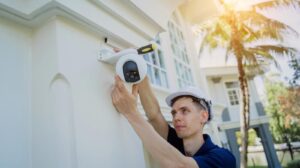
Security cameras help homeowners see activity around the home. They can support awareness when someone approaches the property, enters a visible area, or moves near an entry point. They may also help document activity before, during, or after a security concern.
A well-planned camera setup can improve visibility around doors, walkways, driveways, vehicle areas, side yards, patios, and rear entrances. These are often the places where homeowners want better awareness because they connect directly to access points or less visible parts of the property.
Security cameras are not a replacement for door fortification, security window film, alarms, or monitoring options. They work best as part of a broader plan that includes both physical resistance and electronic detection.
Why Camera Placement Matters
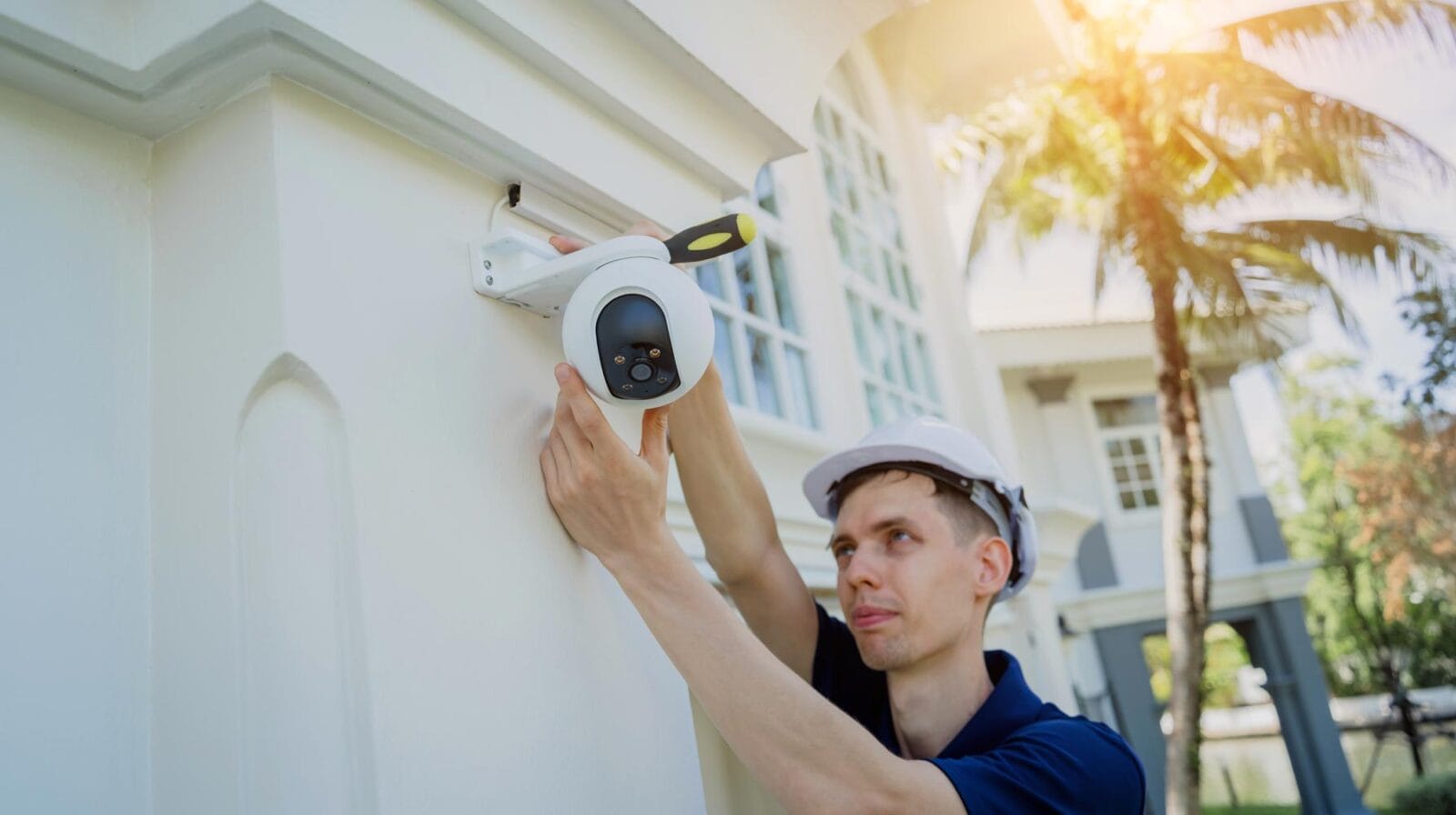
A security camera is only useful if it covers the right area. Poor placement can leave blind spots, miss important movement, or record an angle that does not provide enough useful detail. Good placement should consider entry points, approach paths, lighting, visibility, privacy, power access, recording needs, and how the homeowner expects to use the system.
For example, a camera near the front entrance may help show visitors and activity at the door. A camera near a driveway may help monitor vehicles and approach paths. A camera near a rear entrance or patio area may help improve visibility in a space that is less visible from the street.
Canada First can help homeowners review camera coverage as part of a broader home protection plan. The focus is not simply adding more cameras. The focus is placing cameras where they support real security goals.
How Security Cameras Work With Alarms and Monitoring Options
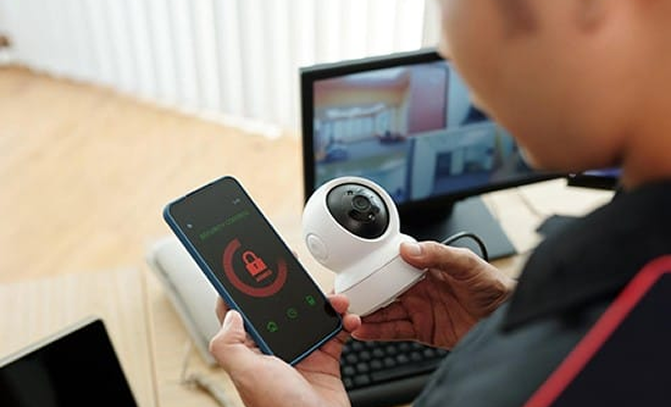
Security cameras, alarms, and monitoring options each serve a different purpose. Cameras improve visibility. Alarm systems help detect activity and send alerts. Monitoring options may support response depending on the setup.
When these layers work together, homeowners are not relying on one tool to do everything. A camera may show activity near a rear door. An alarm may detect a door opening or motion event. Monitoring options may help support the response process where appropriate.
This layered approach can help homeowners make better decisions because the system is not only documenting activity after the fact. It can also support awareness and detection while working with other home protection layers.
Hinge-Side Reinforcement and Door Direction
The hinge side of the door should not be ignored. While many forced-entry concerns focus on the lock side, the hinge side also affects how the door holds under pressure. If hinge screws are short, loose, or attached only to weak trim, the door may not perform as well as expected.
Hinge-side reinforcement may include stronger fastening, review of hinge condition, or additional reinforcement depending on the door type. This can be especially important for doors that see heavy use, older doors, or doors where the hardware has loosened over time.
Door direction can also affect the reinforcement approach. Inward-swinging and outward-swinging doors may have different needs.
Patio access, garage entry points, and secondary entrances may also require different solutions because they use different hardware and experience force differently.
How Security Cameras Work With Physical Fortification
Security cameras are strongest when they are paired with physical protection. A camera can show someone approaching the home, but it does not make a weak door harder to force open. A camera can record activity near a window, but it does not help hold broken glass together.
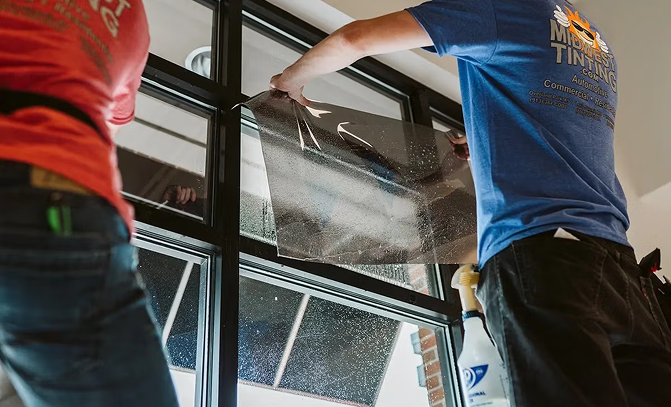
That is why Canada First connects camera coverage with physical fortification. Door fortification, entry-point reinforcement, and security window film help make entry harder. Cameras help improve visibility around those same areas.
For example, a rear door may benefit from door reinforcement, alarm coverage, and camera visibility. A patio door may benefit from security window film, camera coverage, and glass break detection. Each layer supports the others and helps create a more complete home protection plan.
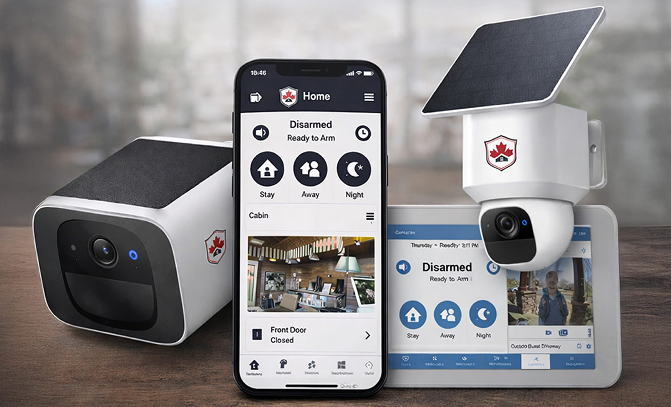
Cameras improve visibility, while physical fortification helps address the physical security of vulnerable entry points.
Areas Where Camera Coverage May Be Helpful
Camera coverage may be helpful around front entrances, porches, driveways, walkways, side paths, rear doors, patio areas, garage access points, and other areas where movement is likely. The best areas depend on the home’s layout, lighting, visibility, and security concerns.
A side yard that is hidden from the street may need attention because it gives someone more privacy. A rear entrance may need coverage because it is often less visible to neighbours. A driveway may need visibility because it connects to vehicles, garage access, or the main approach to the home.
The goal is not to place cameras everywhere. The goal is to cover the areas that provide the most useful awareness and support the rest of the protection plan.
What Homeowners Should Consider Before Installing Security Cameras
Before installing security cameras, homeowners should think about what they want the system to accomplish. Some homeowners want better visibility at the front entrance. Others want to monitor the driveway, rear door, patio area, or side yard. Some want camera coverage to support an alarm system or a broader home security plan.
Important considerations include camera placement, field of view, lighting, recording needs, alert preferences, privacy, and how the cameras will work with the rest of the system. A clear plan helps prevent gaps and makes the final setup easier to use.
Canada First can help homeowners review these considerations as part of a layered home protection discussion. This helps avoid overbuying equipment and keeps the focus on practical coverage.
Security Cameras Are Not a Standalone Security Plan
Security cameras are valuable, but they should not be treated as a standalone solution. A camera may help show what happened, but it does not physically stop forced entry. A stronger plan also considers doors, windows, glass, alarms, monitoring options, and FogShield where appropriate.
This is why Canada First uses a layered home protection approach. Security cameras are one layer. Physical fortification, security window film, alarm systems, monitoring options, and FogShield may also play a role depending on the property.
This is especially important for homes with vulnerable entry points. If a rear door is weak, camera coverage may help document activity, but door fortification may still be needed. If patio glass is exposed, camera visibility may help, but security window film may provide the physical resistance the glass needs.
A layered plan helps homeowners avoid relying on one product and instead build protection around how the property is actually used.
How Security Cameras Fit Into a Canada First Home Protection Plan
Canada First uses security cameras as part of a layered home protection approach. Cameras improve visibility. Alarm systems support detection and alerts. Monitoring options may support response depending on the setup. Physical fortification helps make forced entry harder. Security window film helps strengthen vulnerable glass. FogShield anti-intrusion systems can add disruption after activation when appropriate.
The right plan depends on the property’s layout, the condition of entry points, the amount of exposed glass, the lighting around the home, and the homeowner’s security concerns.
A practical camera plan should support the larger protection strategy. It should help homeowners see important areas, reduce blind spots, and connect with the other layers that protect the home.
A practical camera plan should support the larger protection strategy. It should help homeowners see important areas, reduce blind spots, and connect with the other layers that protect the home.
Frequently Asked Questions
Are security cameras enough to protect a home?
Security cameras are helpful, but they work best as part of a layered plan. Cameras improve visibility, while door fortification, window film, alarms, monitoring options, and FogShield can support other parts of the protection strategy.
Where should home security cameras be placed?
Camera placement depends on the property. Common areas to review include front entrances, driveways, porches, side yards, rear doors, patio areas, garage access points, and other places where activity may occur.
Do security cameras work with alarms?
Yes. Security cameras can work with alarm systems as part of a broader home security plan. Cameras support visibility, while alarms support detection and alerts.
Can security cameras help with blind spots?
Yes. One of the main benefits of camera coverage is improving visibility in areas that are harder to see from inside the home, such as side paths, rear entrances, driveways, and patio areas.
Should cameras be installed before door fortification?
It depends on the home. If entry points are weak, door fortification may need attention first. If visibility is poor, cameras may be a priority. Many homes benefit from both.
Does Canada First serve Toronto and the GTA?
Yes. Canada First serves homeowners in Oakville, Toronto, and the GTA with layered home protection options, including security cameras, alarms, physical fortification, security window film, monitoring options, and FogShield where appropriate.
Book a Home Defence Audit With Canada First
Book a Home Defence Audit With Canada First
If you are comparing security camera options for your home in Oakville, Toronto, or the GTA, Canada First can help you review where camera coverage may fit within a layered protection plan.
Book a Home Defence Audit with Canada First to review camera coverage, alarms, door fortification, security window film, monitoring options, FogShield, and other layers that may fit your property.
Protect Your Home Before a Break-In Happens
Every home is different. Canada First Security can assess your property and recommend the right combination of physical security, alarms, cameras, monitoring, and other protection layers.